Zahra Seyedsharifi
PhD student in Ocean Engineering (UT Austin, current) | Advisor: Prof. Spyros A. Kinnas
MSc in Water Engineering and Hydraulic Structures (Sharif University of Technology, 2022)
Zoom Link: https://utexas.zoom.us/j/84804724445
Abstract
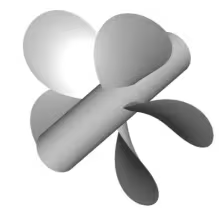
Simulating viscous flows around hydrofoils and propellers is central to the design of marine propellers and renewable-energy systems. However, conventional numerical simulations can be computationally expensive, largely because conventional solvers must resolve the entire fluid domain. But what if most of that domain doesn’t need to be computed at all?
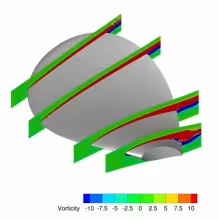
The VIScous Vorticity Equation (VISVE) method takes a different approach. By solving the vorticity transport equation directly, it exploits a simple physical fact: vorticity is concentrated near solid boundaries and in wakes. As a result, VISVE requires only a compact solution domain and far fewer grid cells than conventional approaches. This study presents recent applications of VISVE to two-dimensional stationary, rotating, and pitching hydrofoils, as well as three-dimensional hydrofoils and propellers. VISVE results are compared systematically with Reynolds-Averaged Navier–Stokes (RANS) simulations in ANSYS Fluent, including velocity, vorticity, and pressure fields and hydrodynamic forces, along with the effects of grid resolution and turbulence modeling.
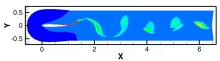
The comparisons show good agreement in essential flow characteristics, including highly three-dimensional rotating flows, while VISVE uses up to 38 times fewer grid cells and up to 16 times less wall-clock time per time step. Finally, the current current capabilities of VISVE and its potential as an efficient tool for marine and renewable-energy applications will be discussed.